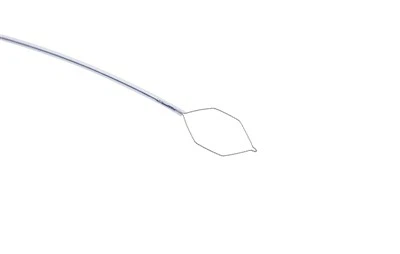
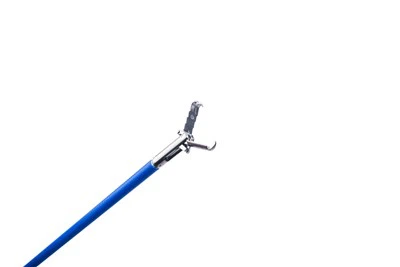
1. Precautions in use Hard tube endoscopes are rarely damaged during surgery. Although they may come into contact and bump with human tissues such as muscles, mucous membranes, and bones, these bumps are minor and will not cause peeping. The damage of the mirror, because it only plays the role of observation, not the force point of other instruments. However, when using other instruments, especially forceps and scissors with high occlusal force, care should be taken that the front end of the mirror tube does not protrude into the occlusal area of the instrument, so as to avoid accidental injury to the mirror tube. When using this type of instrument, sometimes the doctor extends the speculum very close to the tissue in order to see the tissue in the occlusal area. When the instrument is occluded, the speculum is not retracted, and the speculum is accidentally injured. Such accidents can be avoided by making sure that all the occlusal openings of the instruments are within the observation range of the speculum during surgery.
Some surgical scopes are used in the sheath. When replacing other angle scopes or inserting and removing instruments, attention should be paid to light movements and not excessive force. Especially in the process of inserting and removing the speculum, when it encounters resistance and cannot be pulled out, the reason should be carefully searched for, and if necessary, it should be pulled out together with the sheath tube, and do not use brute force. When the speculum is operated with photoelectric technologies such as laser vaporization, high-frequency electric cutting, microwave, etc., attention should be paid to the distance between the front end of the speculum and the treatment point to ensure that the front end of the speculum will not be electrocuted or burned. When using these instruments for the first time, the chief surgeon should practice repeatedly to master the relationship between the object distance in the speculum image and the actual object distance, and confirm the shortest distance between the front end of the speculum and the treatment point, so that they can be applied freely in actual surgery. At present, the planer has been widely used in the clinical operation of ENT and orthopedics to remove the diseased tissue. The cutter head is sharp, high hardness, fast rotation speed, and large torque. If the endoscope is cut, the endoscope will be damaged. In this type of operation, attention should be paid to adjusting the speed of flushing and suction, to ensure that the image of the speculum is clear and not blocked by blood stains at any time, and the rotating part of the control cutter head is always within the observation range of the speculum. The cutter head rotates, and then the speculum is moved, and then the cutter head is moved under the surveillance of the speculum, and then starts to plan after reaching the appropriate position. When it is felt that the planer is working abnormally or the illumination suddenly decreases, it is possible that the speculum has been damaged and should be replaced in time to avoid greater losses. Generally, for important operations, there should be a set of spare endoscopes and key instruments, which can be easily replaced when problems are found; if the endoscopes with inappropriate angles or unsuitable instruments are used for reluctance to operate, it is easy to cause damage to the endoscopes.
2. How to maintain the rigid tube endoscope The rigid tube endoscope should be kept by a special person and stored in a special box, lined with soft sponge or polyurethane foam. All speculum and surgical instruments should be neatly stacked, and should not be placed overlapping each other to ensure that after the lid is closed, the speculum and instruments inside will not collide with each other during transportation. Because the lens tube of the endoscope is very thin, it will be bent and deformed when it is squeezed, bumped, bent, dropped, etc., resulting in damage to the lens or offset of the optical axis, resulting in unclear or unusable images, so take it out of the box. Or when placing the hard tube endoscope, you should hold it flat with both hands, take it out or put it in gently, and do not lift it up and pull it out. When the speculum is moved in a hard container such as a tray, be careful to place it separately from other instruments, and do not bump it too much, so as not to collide with the speculum. Desiccant should be provided in the packing box to keep it dry.